
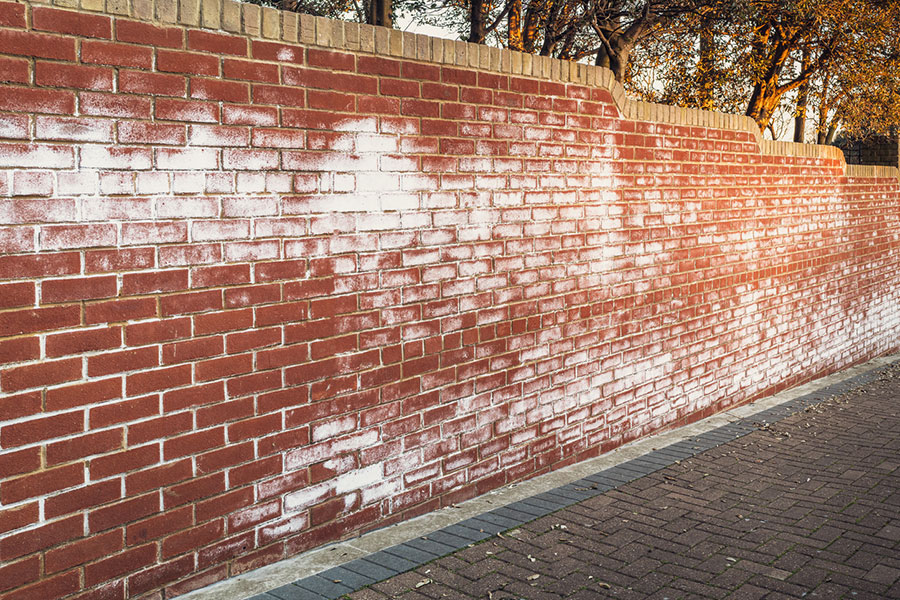
If you’re seeing white, chalky stains on your brick walls, chimney, patio, or other masonry, you may be concerned that your bricks are deteriorating or that there’s something more serious going on behind the scenes.
Efflorescence is the technical term for those white deposits, and they don’t necessarily signal a major structural concern. However, it can be a sign that moisture is getting inside the masonry work. It’s important to understand why it happens so you can determine whether the stains are simply cosmetic or a sign that your brickwork needs attention by a masonry contractor in Michigan.
Brick Efflorescence: Defined
Efflorescence is when water moves through porous masonry and brings dissolved salts to the surface. As the moisture evaporates, the salts stay behind, resulting in a white or light-colored powdery residue.
Efflorescence can be present on:
- Exterior brick walls
- Chimneys
- Brick patios and walkways
- Retaining walls
- Brick porches and steps
- Other masonry surfaces
It’s common to notice efflorescence particularly after periods of heavy rain, snow, or other moisture exposure.
What Causes Efflorescence?
Because bricks and mortar are porous, water can easily enter the masonry through cracks, deteriorated mortar joints, improper drainage, or normal exposure to the elements. As that moisture travels through the brickwork, it dissolves naturally occurring salts that can rise to the surface in the form of a chalky looking substance.
You may wonder: is efflorescence a serious problem? Usually, it’s just a cosmetic issue and doesn’t signal failure of the masonry work itself.
However, don’t be too quick to ignore recurring or extensive efflorescence. Why?
If moisture is consistently getting into your masonry, the underlying water issue can eventually cause other problems, such as deterioration of mortar and brick damage caused by repeated freeze-thaw cycles.
Can Efflorescence Be Removed?
Yes, but just because the white residue is gone, it doesn’t necessarily mean the underlying problem has been solved. Depending on the surface and severity, efflorescence can be removed with cleaning methods such as dry brushing. Just steer clear of aggressive cleaning methods or improper chemicals, as these can damage brick and mortar.
More importantly, if moisture continues to enter the masonry, the efflorescence may return – another good reason to get the situation assessed by a Michigan mason.
When Should You Call a Masonry Professional?
Recurring stains or other signs of masonry deterioration will need the attention of a professional.
Schedule a masonry inspection if you notice:
- Cracked or crumbling bricks
- Deteriorating mortar joints
- Water stains or damp areas
- Bulging or shifting brickwork
- Repeated efflorescence
- Damage that becomes worse after winter
A professional masonry contractor in Michigan can evaluate the condition of the brickwork and look for potential sources of moisture. Repairs can include:
- Repointing deteriorated mortar
- Replacing damaged bricks
- Improving drainage
- Addressing the source of other water entry points
Protect Your Brickwork
Efflorescence may look unsightly, but it’s not necessarily a sign that your masonry is failing. However, don’t ignore recurring white stains that will require addressing moisture sources.
Contact It’s The Brick Guys
If you’re concerned about efflorescence, deteriorating mortar, or other signs of brick damage, contact It’s The Brick Guys to schedule an assessment at (833) 627-4257.
