
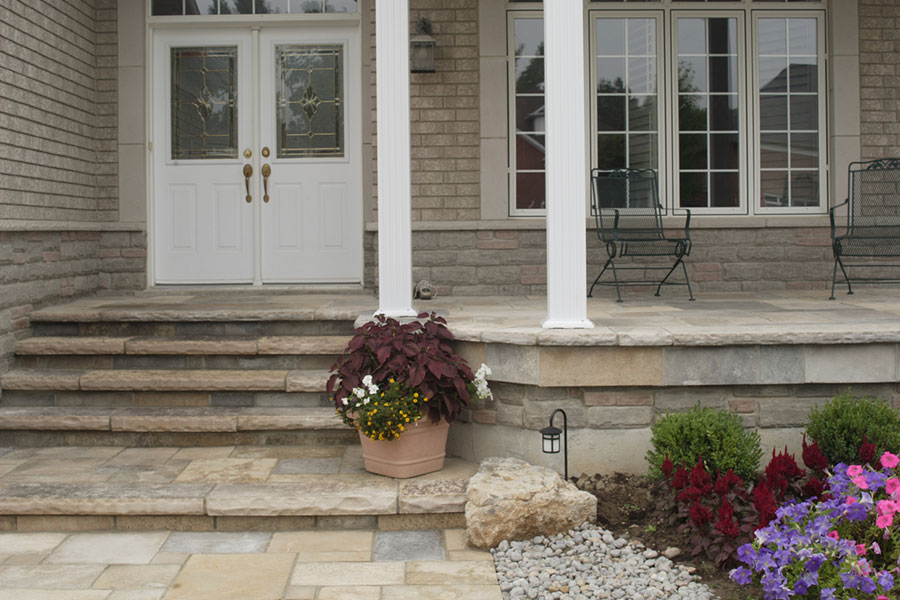
When you think about a patio, your backyard probably comes to mind first. But why should the back of the house get all the attention?
A well-designed front patio in Michigan can turn unused space into an inviting extension of your home. It can create a place to sit with a cup of coffee, give guests a more welcoming arrival and connect your front door, walkway and landscaping into one cohesive design.
If the front of your house feels like it’s missing something, a custom brick or paver patio could be the answer.
Start With One Question: Would You Actually Sit There?
Before choosing pavers, colors or patterns, think about how you would use a front patio.
Would you like a place to:
- Sit outside in the morning?
- Talk with neighbors?
- Add a small table and chairs?
- Put a bench near the entry?
- Display seasonal planters?
- Create a larger gathering space?
A decorative landing may only need a small footprint. A patio intended for seating needs enough room for furniture and comfortable movement around it.
Designing around how you’ll actually use the space can help determine the size, shape and location of your new patio.
Look at the Front of Your House From the Street
Here’s an easy planning exercise: walk across the street and look back at your house.
Pay attention to:
- The visual path to the front door
- Empty areas near the entrance
- Existing brick or stone
- Porch size and shape
- Walkway placement
- Landscaping
- Driveway location
- Symmetry, or lack of it
A front patio can sometimes help visually balance a home’s exterior, particularly when the existing entrance feels small compared with the rest of the façade.
Make the Walk to Your Front Door Part of the Design
Consider how guests move from the driveway or sidewalk to your front door. A new patio could connect with:
- A brick walkway
- Front steps
- A porch
- The driveway
- Garden paths
- Landscape borders
Using complementary pavers, patterns or borders can help these separate features feel like parts of one overall design.
You can even use a change in pattern to visually distinguish the patio from the walkway without introducing an entirely different material.
Your Patio Doesn’t Have to Match Your House
Trying to find pavers that perfectly match existing brick can unnecessarily limit your choices. Instead, look for materials that complement the home.
Draw inspiration from your:
- Exterior brick
- Stone accents
- Siding
- Trim
- Roof
- Front door
- Existing hardscaping
For example, a contrasting border can pick up one of the darker tones in your home’s brick. A lighter paver might provide contrast against a darker façade.
What About a Small Front Yard?
You don’t need a sprawling front lawn to create a useful patio. In fact, a compact space can sometimes benefit the most from thoughtful hardscaping.
Consider:
- A small seating area beside the porch
- An expanded front landing
- A curved patio incorporated into landscaping
- A bench area along a walkway
- A narrow patio with two chairs and a small table
Scale is important. An oversized patio can overwhelm a small yard, while a thoughtfully proportioned design can make the same space feel more purposeful.
Don’t Forget the View From Inside
Most front-patio planning focuses on what the house looks like from the street. However, you should think about what the patio will look like from inside your home.
If it sits outside a prominent front window, you’ll see the space throughout the year. Think about how furniture, pavers, planters and landscaping will look from your living room or other interior spaces.
A patio that’s attractive from both directions can become part of the view rather than simply another exterior feature.
Work With Your Landscaping, Not Against It
Hardscaping and landscaping should complement each other. Before settling on the shape of your patio, consider existing:
- Trees
- Shrubs
- Garden beds
- Walkways
- Lawn areas
- Drainage
- Downspouts
You may be able to design around established landscaping rather than removing it.
Planting beds can also soften the edges of a paved area and make a new patio feel more naturally integrated into the yard.
Could Your Existing Front Patio Be Expanded?
If you already have a small paved area near your entrance, don’t automatically assume it has to be removed. Depending on its condition, there may be opportunities to incorporate existing hardscaping into a larger design.
It may make more sense to:
- Restore existing pavers
- Expand the current footprint
- Add a connecting walkway
- Introduce a decorative border
- Reconfigure the layout
- Replace the existing surface entirely
An evaluation by a Michigan brick contractor can help determine whether there’s anything worth preserving before demolition begins.
Call It’s The Brick Guys
Whether you envision two chairs near the front door or a complete patio and walkway transformation, let us you design a hardscape that works with your home, landscaping and lifestyle. Call It’s The Brick Guys at (833) 627-4257 to schedule a free consultation for your custom front patio today.
