
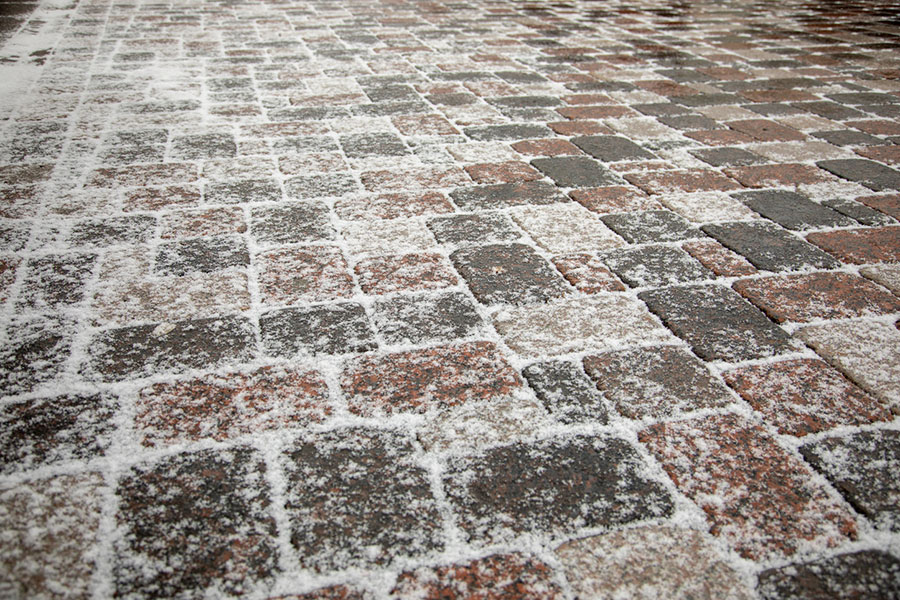
Michigan winters can be brutal, especially on outdoor hardscapes like brick paver patios, walkways, and driveways. When temperatures drop below freezing and the snow starts to fall, you may notice uneven surfaces, raised pavers, dips, or shifting in your brickwork. These issues don’t just detract from the look of your property, they can pose significant safety issues as well – not to mention long-term damage.
It’s important to understand why pavers heave in winter so that you can then take appropriate steps to prevent it. Here’s a look at some of the most common causes of heaving and what you can do about them.
5 Common Causes of Paver Shifting, Settling, and Sinking
Winter heaving can almost always be blamed on one thing: the freeze–thaw cycle. However, there are other things that can make the situation worse, such as the following.
1. Trapped Water
Moisture that gets trapped under pavers will freeze and expand, which then pushes the pavers out of place over time. When the temperatures warm up, the ice melts and the pavers settle unevenly, resulting in dips or loose stones that can pose tripping hazards.
Here are some common sources of moisture:
- Poor drainage
- Incorrect slope
- Soil that retains water
- Gaps in edging or joints
2. Improper Base Preparation
The base layer is the foundation beneath the pavers, and it can pose real problems if it wasn’t prepared properly.
A proper base should include:
- Six to eight inches or more of compacted crushed stone
- Stable bedding layer of sand
- Proper compaction
- Even thickness
A base that is too shallow, uneven, or loosely compacted will increase the risk of your pavers shifting when soil freezes and expands.
3. Poor Drainage or Incorrect Grading
Your patios and walkways should slope away from your house or toward a drainage point. If not, water will have nowhere else to go except under pavers. From there, it freezes and causes heaving. Proper pitch is critical for ensuring long-term stability and durability.
Warning signs of drainage issues include:
- Water that pools on or around the pavers
- Melted snow that refreezes in depressions
- Puddles near the edges of patios and driveways
4. Failing or Missing Edge Restraints
Edging keeps pavers in place. If the edging is deteriorated or was never installed in the first place, pavers can spread outward. Not only does this loosen the pattern, it allows movement during winter. You need a solid edge restraint system to prevent shifting during winter.
Be on the lookout for:
- Pavers that shift outward
- Gaps that form along the sides
- Visible movement as time passes
5. Sand Loss Between Joints
Joint sand stabilizes pavers, but it can be washed away with rain, foot traffic, and snow removal equipment. In turn, this loosens the bond between pavers, allowing for:
- Water infiltration
- Movement during freezing temps
- Gradual sinking or lifting
It’s important to regularly re-sand the area to keep the surface stable.
How You Can Prevent Heaving
It takes a blend of maintenance and good installation practices to keep heaving at bay.
- Improve Drainage Systems: Re-grade the area, add drains, or adjust slope to redirect water.
- Refill Joint Sand: Add polymeric sand before winter to lock pavers in place.
- Inspect and Reinforce Edging: Fix or replace edging to prevent outward movement.
- Avoid Salt-Based Ice Melters: Use sand or calcium magnesium acetate rather than salt, which can accelerate sand loss and worsen freeze-thaw damage.
- Clear Snow Properly: Use plastic shovel edges or snowblowers to prevent scraping or moving the pavers.
- Hire a Professional For Re-Leveling: If your pavers are sinking or lifting, hire a professional paver repair company in Macomb County to reset the base and restore proper pitch. Winter will only make things worse, so nip this issue in the bud now to prevent further damage.
Contact It’s The Brick Guys
If your pavers have shifted, sunk, or become uneven, let our brick experts in Wayne Countyre-level, repair, or rebuild your brick paver surface. Contact us today for a free quote and consultation!
